




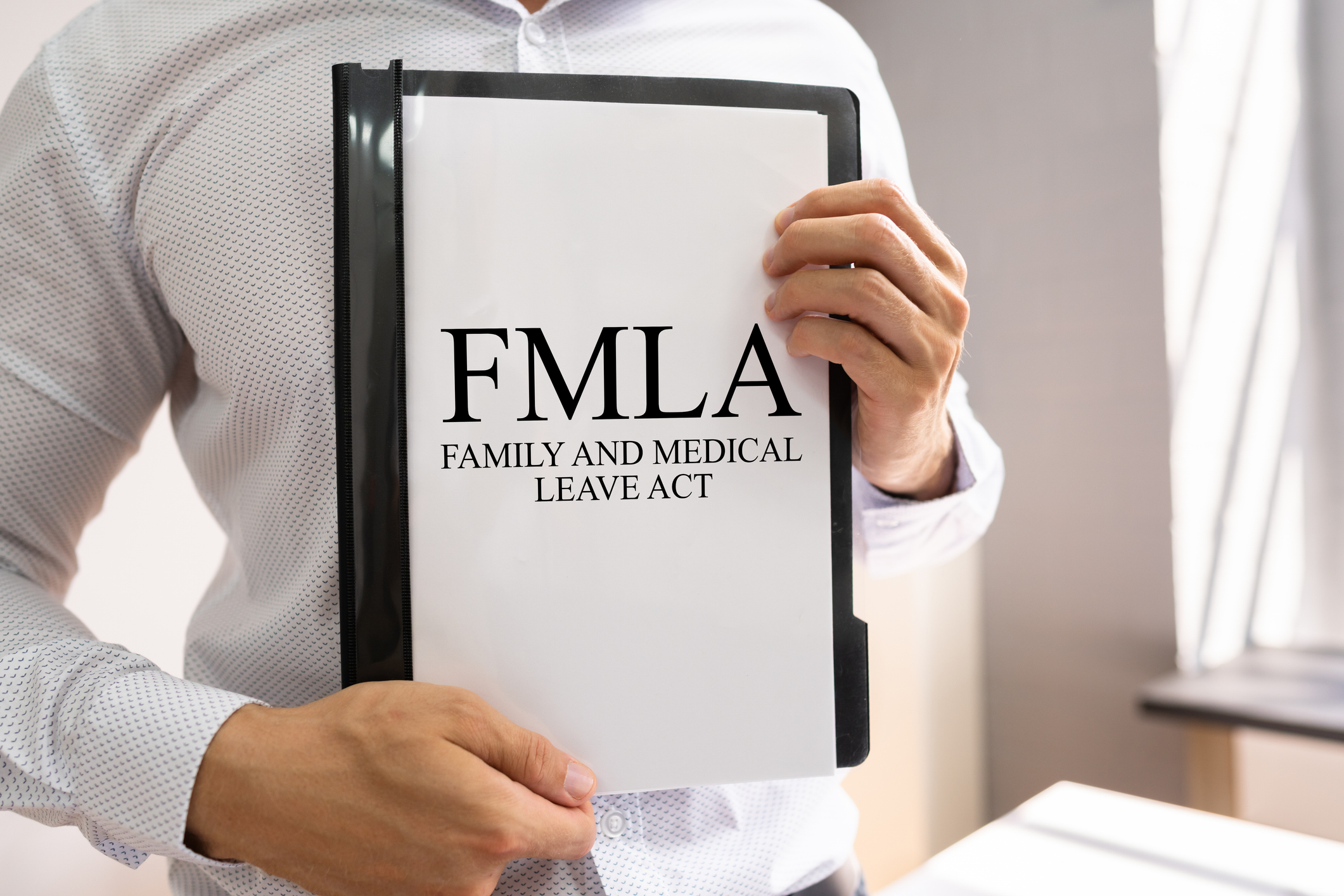
Losing your job is hard enough under any circumstances. Losing it right after a medical emergency, or while you were still recovering, is a different kind of blow entirely. If your employer terminated you, demoted you, or made your work life unbearable after you took or requested medical leave, you may be facing something that federal law explicitly prohibits: FMLA retaliation.
Workers in Brooklyn and across New York deal with this more often than most people realize. Employers do not always announce that they are punishing you for taking leave. The retaliation can be subtle, strategic, or disguised as something else entirely. Knowing what the law says and what your next steps should be can make a meaningful difference in the outcome.
What Is FMLA and Who Does It Protect?
The FMLA grants eligible employees up to 12 weeks of unpaid, job-protected leave per 12-month period, or up to 26 weeks for military caregiver leave for qualifying medical and family reasons.
The Family and Medical Leave Act, found at 29 U.S.C. § 2601 et seq., requires covered employers to provide eligible employees with up to 12 workweeks of unpaid, job-protected leave during a specified 12-month period. This leave can be used for a serious health condition, or to care for a spouse, child, or parent with a serious health condition, or following the birth or adoption of a child.
To be eligible, you must have worked for your employer for at least 12 months, logged at least 1,250 hours in the past 12 months, and work at a location where the employer has 50 or more employees within 75 miles for 20 or more workweeks in the current or preceding calendar year. If those boxes are checked, your employer cannot legally fire you, demote you, or otherwise retaliate against you for exercising your FMLA rights.
What Counts as FMLA Retaliation?
FMLA retaliation occurs when an employer takes adverse action against an employee because they used or requested protected medical leave.
Under 29 C.F.R. § 825.220, it is unlawful for any employer to interfere with, restrain, or deny the exercise of FMLA rights, and it is equally unlawful to discharge or discriminate against any employee for opposing or complaining about any practice made unlawful under the Act.
Retaliation does not always look like an immediate firing. Common forms include:
- Termination shortly after returning from or requesting leave
- Demotion or a sudden reduction in hours or pay
- Negative performance reviews that did not exist before the leave
- Being excluded from meetings, projects, or promotions after returning
- A hostile work environment that pushes you toward quitting, though an unpleasant workplace or ordinary work criticism alone does not constitute unlawful retaliation
The timing between your leave and the adverse action is often an important indicator of causation, though employers rarely make the connection explicit.
How Do You Prove FMLA Retaliation?
To prove FMLA retaliation, you must show that you engaged in protected activity, that your employer took an adverse action, and that a causal link exists between the two.
Courts typically look at three elements: that you exercised a right protected by the FMLA, that your employer took an adverse employment action against you, and that a causal connection exists between the two. Close timing is one way to establish that connection, but other evidence strengthens a claim considerably.
Useful evidence includes emails, performance reviews, written warnings, witness statements, or any documentation showing a shift in your employer’s treatment after you disclosed a medical need or requested leave. If your employer changed their stated reason for terminating you more than once, that inconsistency can also work in your favor.
What Are the Deadlines for Filing an FMLA Claim?
FMLA retaliation claims must generally be filed within 2 years of the violation, or within 3 years if the violation was willful.
Time matters. Under 29 U.S.C. § 2617, the statute of limitations for filing an FMLA retaliation claim is two years from the date of the violation. If the employer acted willfully, meaning they knew or showed reckless disregard for whether their conduct violated the law, that window extends to three years.
You can file a complaint with the U.S. Department of Labor’s Wage and Hour Division, or bring a private lawsuit in federal court. Both paths are available, and each has strategic considerations depending on your situation. Waiting too long can forfeit your right to pursue either option, so acting promptly is essential.
New York State Provides Additional Protections
New York’s Paid Family Leave law and the New York State Human Rights Law may offer additional protections beyond those covered by the federal FMLA.
Brooklyn workers benefit from protections that go beyond the federal floor. New York’s Paid Family Leave law, administered through the Workers’ Compensation Board, provides paid, job-protected leave for qualifying reasons such as bonding with a new child or caring for a family member, but generally not for an employee’s own medical condition, and applies to employers with eligibility rules based on schedule and tenure. For your own medical condition, New York disability benefits, paid sick leave, or reasonable accommodation laws may apply instead. Additionally, the New York State Human Rights Law prohibits disability-based discrimination, which can overlap with and supplement an FMLA retaliation claim.
If your employer’s conduct also involved discrimination based on a disability, pregnancy, or another protected characteristic, you may have additional avenues through the New York State Division of Human Rights or the New York City Commission on Human Rights.
Steps to Take Right Now
If you believe you were fired or penalized for taking a medical leave, take these steps without delay.
First, document everything. Write down the timeline of your leave request, your employer’s response, and every adverse action that followed. Provide proper notice for foreseeable leave, usually 30 days, or as soon as practicable for emergencies, and follow your employer’s standard call-in procedures. Preserve emails and any written communications.
Second, preserve your own employment records and ask the employer in writing for relevant documents. Note that New York Labor Law § 201 does not generally give employees a broad right to inspect their personnel files, though access may exist under union agreements or employer policies. Avoid removing confidential company materials or private medical information of other employees.
Third, do not sign any severance agreement or release of claims without first understanding what rights you may be giving up.
Speaking with an attorney before making any formal filings can help you understand which claims apply to your situation and which forum gives you the strongest position.
How The Law Office of Vincent Miletti, Esq. Can Help
Workplace retaliation cases are fact-intensive and time-sensitive. At The Law Office of Vincent Miletti, Esq., we represent Brooklyn employees who have faced unlawful treatment after exercising their workplace rights. If you were fired or pushed out after a medical emergency, we are prepared to evaluate your situation and help you understand what legal options are available to you. Reach out to us at 609-293-5928 or schedule a consultation.
